Reflection · your first note
What teaching taught me about advising
A 300-word reflection in your own voice. Suggested title only.
Beyond Numbers. Building Systems, Businesses & Meaningful Connections.
Chartered Accountant, entrepreneur, strategic advisor and lifelong learner. For over two decades, my work has connected finance, business systems, risk, technology and people. This space brings together what I do, what I am building, what I think and the conversations I hope to create.
A brief introduction
I qualified as a Chartered Accountant in 2006 and began my career in the accounts and insurance functions at Torrent Pharmaceuticals. Two years later I became a promoter director of JS Assignments, and since then my work has moved steadily from recording numbers to designing the systems that produce them, and from advising businesses to helping build them.
Today that work spans virtual CFO support, MIS and automation, infrastructure execution, engineering, energy, consumer brands and education. Along the way I added qualifications in information systems audit, insurance and risk management, and an MBA in insurance and financial planning, because each new problem asked for a new way of looking at it.
What connects all of it is a simple belief: good financial information should lead to better decisions, and good systems should make people more accountable, not less human.
My work falls under six heads. Each one leads to the organisations and roles behind it, described with my exact capacity in each.
Lines show where I contribute. They do not show ownership or control. See the list view
Most conversations with me begin with one of four kinds of question. If yours fits, start there. If it does not, write anyway.
These are the ideas behind how I advise, build and hire. Each one can be copied and shared.
These principles are drafted from your brief and your work. Edit the wording until each one sounds like you.Teaching, sport, devotion, creative work and a habit of going back to study. These shape the work as much as any qualification.
Short updates, articles and talks, wherever you prefer to read them.
Live posts appear here automatically once the site is hosted on satvikshah.com. Preview pages cannot load embedded feeds.Whether you are weighing a business decision, a property transaction, a partnership or a career step, a short note is the best place to begin.
A Chartered Accountant who kept asking what the numbers were for, and followed the answer into systems, businesses and classrooms.
I am a Chartered Accountant by training and a builder by temperament. For twenty years I have worked where finance meets operations: closing books, designing reports, setting up controls, structuring deals, and more and more often, helping to run the businesses themselves. This page is the longer version of how that happened.
I was a studious boy, and from early on I knew what I wanted to do with it. I wanted to bring my head for commerce and my creative streak to real businesses, and to contribute to them in a way that showed. I completed my B.Com and M.Com at [institution], [years], and chartered accountancy was the natural next step.
Looking back, the role I grew into was always going to be the virtual CFO. It is the one position that lets me contribute to many businesses at once, combining the discipline of finance with the creativity of building something.
I qualified as a Chartered Accountant in 2006. The articleship years taught me what textbooks could not: that every ledger reflects a set of human decisions, and that most errors are process failures before they are accounting failures. Add one story from articleship or the exams that still shapes how you work.
My first role was as Assistant Manager in the accounts and insurance functions at Torrent Pharmaceuticals, from 2006 to 2008. Working inside a large organisation showed me how scale depends on routine: closing processes that run on time, insurance cover that is reviewed before it is needed, and controls that people actually follow. It was also my first serious exposure to risk and insurance, a thread that has stayed with me ever since.
In 2008 I became a promoter director of JS Assignments Private Limited. The company grew in two directions that look different but share a discipline. On one side is finance and management consulting: virtual CFO support, MIS, compliance management and process improvement for owner-managed businesses. On the other is execution: road works carried out as a subcontractor on infrastructure projects. Running both taught me that a site schedule and a month-end close fail for the same reasons, and succeed for the same reasons too.
From 2010 to 2020 I was Associate Vice President at ICA Edu Skills, and I have taught at The Maharaja Sayajirao University of Baroda and at ICA. Teaching forces clarity. If I cannot explain a GST credit rule or a cash-flow statement to a first-year student, I probably do not understand it as well as I think. That habit of explaining things simply now runs through my advisory work, and through ARTHA ASCENT, the foundation programme we have built at JS Assignments.
My DISA qualification in information systems audit changed how I look at finance teams. I stopped asking only whether the numbers were right and started asking whether the process that produced them could be trusted without me in the room. Much of my recent work is exactly that: expense approval portals, billing systems, daily book-closure checklists, accountability trackers, and reports that tell an owner what to do next instead of what happened last quarter.
Since 2018 I have been a director of A&W Engineering Works (India) Private Limited, which works in ultrasonic and medical-device engineering. In 2021 I joined the board of 7E's Industries Private Limited in the energy sector, and in 2023 Artkart Lifestyle Private Limited, an art-and-craft business. I am also CFO of Hyderabad Strikers in the Tennis Premier League, and act as CFO for engineering, infrastructure and consumer businesses, and I am closely involved with Avyukt World, a Krishna-themed devotional and lifestyle brand that is as much a personal passion as a business.
Risk has been a constant. After DIRM, I went back to study fourteen years after qualifying as a CA, completing an MBA in Insurance and Financial Planning at Chitkara University in 2022. I also advise families and business owners on life insurance as an agent of Life Insurance Corporation of India. I see insurance as a risk decision before it is a product decision, and I try to keep the conversation in that order.
Across every role, the lesson that repeats is that systems do not run businesses; people do. The best system is one that makes good work visible and makes it easy for people to do the right thing. I value straight answers, written commitments and follow-through, and I try to offer the same. Optionally name a mentor or a turning point that shaped this belief.
I am now a founding member of XCo, The Execution Company, and I am spending more time writing, mentoring and turning what I have learned into repeatable systems that other businesses can use. I want to help more owner-managed businesses in India make decisions with the clarity that large companies take for granted. Add one personal aspiration for the next decade.
Every entry, posted in date order, with its folio reference to the area of work it belongs to.
| Date | Particulars | L.F. | Nature |
|---|---|---|---|
| 2026 | Balance carried forward. Still learning, still building. | ||
This is a record of my involvement, not a group structure. Each entry states my exact capacity, the period and the current status. Logos and links belong to the organisations themselves.
Lines show where I contribute. They do not show ownership or control.
I work with business owners, families, founders and investors on decisions where finance, risk and execution meet. Engagements run through JS Assignments Private Limited. Tax representation, audit and certification are handled by Shweta Satvik & Co., Chartered Accountants.
A short call or meeting to understand the question, the timeline and what a good outcome looks like.
A one-page note listing what will be done, what will not, who is involved and the fee basis.
A written engagement with the right entity, so responsibility and confidentiality are clear from day one.
Work delivered in agreed stages, with a review conversation at each stage and at the end.
Clients are named only with their permission. These are the sectors my work has covered.
Long-form essays, short reflections and practical notes from business and life. Articles on Indian law state the law in force on the date shown and separate the law from my opinion.
Explore by interest
Only the MIS essay is written in full. The other three are titles and summaries for your review; publish each only after you have written or approved it.Finance & Decision Making
Most management reports are accurate and ignored. The fix is not more data. It is deciding, before anything is built, what the report is for.
Every month, in businesses of every size, someone spends two days preparing a report that the owner reads for two minutes. The numbers are right. The formatting is careful. And nothing changes as a result.
When I review a company's MIS, I rarely find errors in the arithmetic. What I find is a report built to show that work was done, instead of a report built to help someone decide. The difference sounds small. In practice it decides whether finance is a cost centre or a steering wheel.
Before anyone opens a spreadsheet or buys dashboard software, I ask three questions. They take an hour to answer properly, and they save months of reporting that nobody uses.
Every line in a management report should connect to a decision someone can actually take. Revenue by product line matters if someone can change the product mix. Debtor ageing matters if someone will call the customer on Monday. A number that connects to no decision is trivia, however accurate it is.
The test is simple. For each line, write the name of the decision next to it. If you cannot, remove the line or move it to a supporting schedule. Most reports shrink by half, and become far more useful.
A dashboard with forty numbers is a list. A dashboard with four numbers is a decision.
A number on its own says very little. Gross margin of 31 per cent is neither good nor bad until you know what you expected and what you would do if it were 27. So for each important line, agree a trigger in advance: the level at which someone must look closer, and the level at which someone must act.
Triggers turn a report from a description into an alarm system. They also remove a great deal of argument, because the conversation moves from whether a number is worrying to what we agreed to do when it reached this level.
A figure that belongs to everyone belongs to no one. Each line in the report needs a named owner: the person who explains it, who answers for it in the review meeting, and who acts when it crosses its trigger. The owner is not always the person who prepares it. Accounts can compile the debtor ageing, but the sales head owns collections.
Ownership is where most reporting systems quietly fail. Without it, the review meeting becomes a reading session. With it, the meeting becomes a short list of commitments.
Here is the format I use to test an existing report. The rows are illustrative, not drawn from any client.
| Report line | Decision it supports | Look closer at | Act at | Owner |
|---|---|---|---|---|
| Debtors over 90 days | Hold supplies, escalate, or provide | Above 10% of debtors | Above 15% | Sales head |
| Gross margin by product | Re-price or change the mix | 2 points below budget | 4 points below | Business head |
| Cash runway | Draw on limits, defer capex | Below 90 days | Below 60 days | Finance head |
| Statutory dues pending | Pay now or plan the cash | Any item due in 7 days | Any item overdue | Accounts lead |
Illustrative thresholds. Every business should set its own.
If a line in your current report cannot fill all five columns, it is a candidate for removal. If a decision you care about has no line, it is a candidate for addition.
The report gets shorter. The meeting gets shorter too, and ends with actions instead of observations. Preparation time drops because people stop polishing numbers nobody uses. And once the report is organised around decisions, it becomes much easier to automate, because you know exactly which numbers matter and when.
None of this needs expensive software. It needs an hour of honest conversation before the first cell is filled. Start with the three questions. The dashboard can come later.
This essay is general commentary for educational purposes. It is not advice for any specific business. Status: draft written for your review; edit before publishing.
What I care about when I am not reviewing a ledger: learning, teaching, sport, devotion and the people around me.
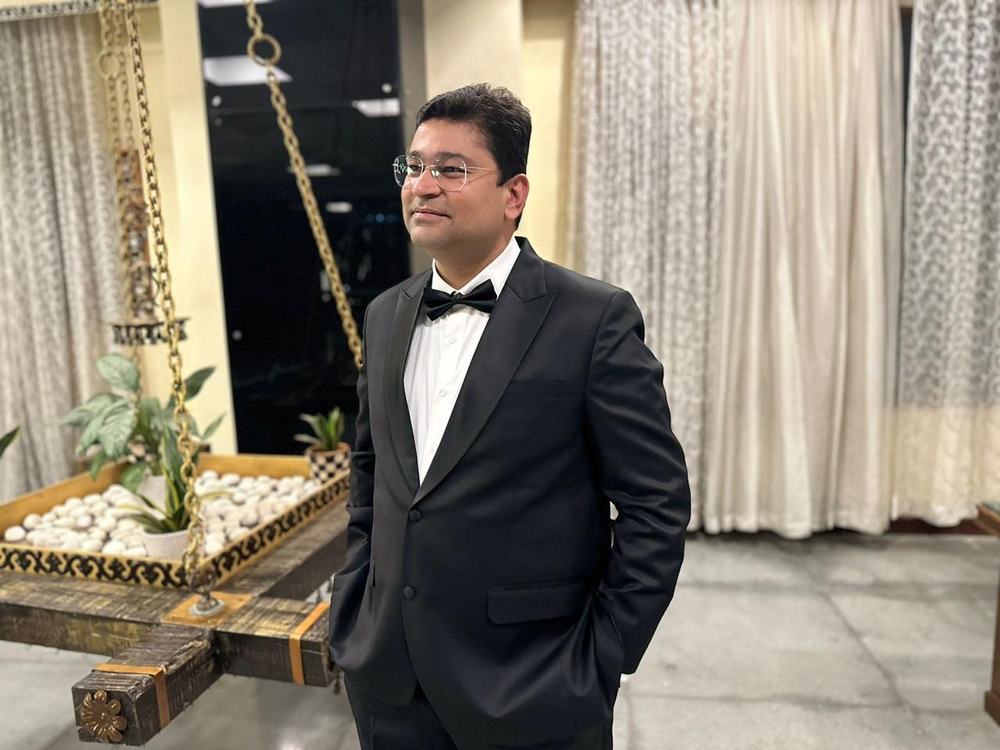
“A studious boy who wanted to bring commerce and creativity to business, and found in the CFO's chair a way to do it for many businesses at once.”
Keep your word in writing.
Commitments that are written down are kept more often, and remembered the same way by both sides.
Teach what you learn.
Explaining something is the fastest way to find out whether you understand it.
Build for the long run.
Brands, teams and relationships all compound. So do shortcuts, in the other direction.
A 300-word reflection in your own voice. Suggested title only.
Why you chose the MBA, and what it changed.
Tell me a little about yourself and what you have in mind. I read every note personally and reply where I can be genuinely useful.
Approved biographies, speaking themes and contact details in one place.
MIS and dashboards for owner-managed businesses.
What to automate first, what to keep human, and how to stay in control.
For families, business owners and young professionals.
Tax, title and documentation for buyers, sellers and landowners.
Lessons from building across sectors.
Use the 50-word or 150-word biography on the About page.
Select a photo to open the high-resolution version.


This website collects personal data only when you choose to send a message through the contact form: your name, email, and any optional details you add. It is processed in line with the Digital Personal Data Protection Act, 2023.
Your details are used only to read and reply to your message. They are not sold, shared for marketing, or added to any mailing list without your separate consent.
Messages are delivered to Satvik Shah's inbox through the website's hosting provider. Hosting provider name and region, once live.
Messages are kept for as long as needed to respond and follow up, and deleted on request.
You can ask to see, correct or delete the details you have sent by writing to the email address on the Connect page.
The site uses no advertising trackers. If privacy-friendly analytics are added later, name them here.